Quick Answer: Chore rewards are a motivation system where kids earn points or privileges for completing tasks, redeemable for prizes or screen time, as an alternative to fixed allowance or punishment-based discipline. The best systems scale across ages, track progress automatically, and sync between co-parenting households.
Printable chore charts work for one child on one schedule. They fall apart fast once you add a second kid, a different age group, or two households. A points-and-rewards system handles what paper can't: tracking who did what, scaling rewards by age, and staying consistent when a child moves between homes.
What Is a Chore Rewards System?
A chore rewards system lets kids earn points, tokens, or credits for completing tasks, then trade those earnings for prizes, privileges, or activities they choose.
Points and rewards tend to motivate kids better than nagging because they shift the conversation from "you didn't do X" to "you're this close to Y." A child tracking progress toward a reward has a reason to start the task without being reminded three times. Nagging produces short-term compliance at best; a visible, earned goal produces repeat behavior, since the child associates the task with a payoff they chose themselves.
Chore Rewards Vs. Chore Allowance: What's the Difference?
Chore allowance is a fixed sum of money paid on a schedule, usually weekly, regardless of exactly which chores get done or how well. Chore rewards, by contrast, are points or privileges tied directly to specific completed tasks, which means the payout scales with effort rather than staying flat.
Some parents separate the two entirely: allowance covers a baseline amount for being part of the household, while a rewards system layers on top for extra tasks or consistency streaks. Others combine them into a hybrid, where points convert into allowance money at the end of the week instead of toys or privileges.
Reality Check: A fixed allowance doesn't tell you which chores actually got done this week, since the payment isn't tied to task-by-task tracking. A points system does, because every task is logged individually.
The right mix depends on what you're trying to teach: allowance alone teaches budgeting, while a rewards layer teaches that effort and consistency pay off in a more direct, visible way.
Why Paper Charts Break Down (and What Replaces Them)
Paper charts break down once a household has more than one child, kids at different ages, or a parent who simply forgets to mark the chart after a busy evening. A chart taped to the fridge only works if every adult in the house remembers to update it every single day.
Common pain points include:
- Different kids need different chore difficulty and reward tiers, which paper can't adjust automatically
- Marks get missed or disputed ("I did do the dishes!") with no record to check
- There's no history to see whether a child is improving or slipping over weeks, not just days
Digital tracking replaces this with an activity history that logs every completed task with a timestamp, and progress charts that show patterns over time instead of a single week. That record settles disputes and shows parents trends a paper chart never could.
How a Smart Point System Works
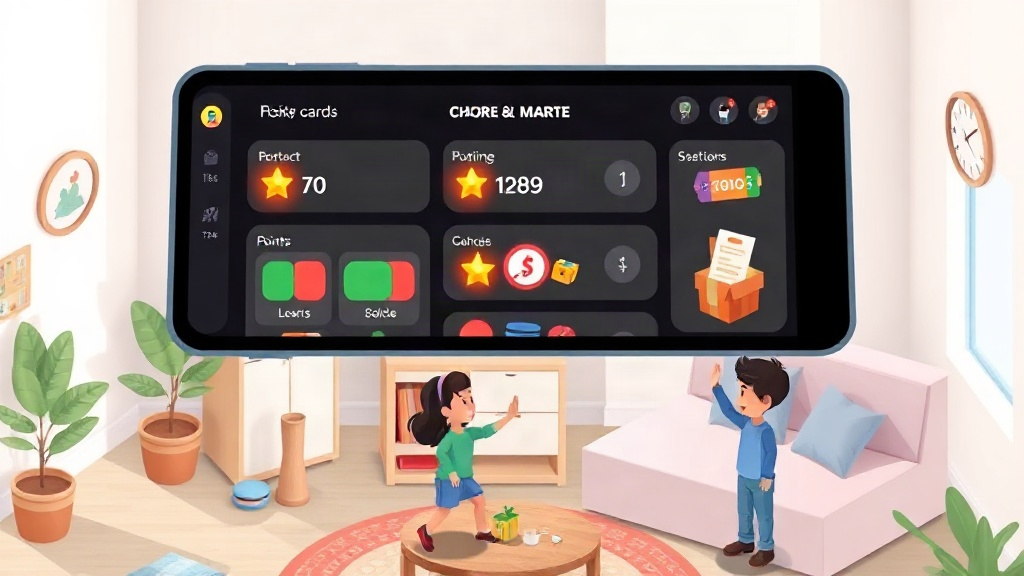
A smart point system assigns point values to individual chores, and kids redeem accumulated points for items or privileges in a reward marketplace. Instead of a flat allowance, the child sees exactly how many points a task is worth before they start it which turns chores into a visible ladder toward something they want.
This structure also makes it easy to weigh effort by difficulty: a harder or less-liked chore can carry a different point value than a quick, easy one, so kids aren't tempted to only pick the simplest tasks. Smart reminders can also prompt a child before a task is due, reducing the back-and-forth of verbal reminders from a parent.
Pro Tip: Look for a system where the reward marketplace lets a child see the full point cost of an item before committing, not just after they've already started saving.
Handling Co-Parenting and Multiple Homes
Syncing matters in co-parenting households because a child who splits time between two homes needs one consistent record of chores and rewards, not two separate, disconnected trackers. Without sync, a parent in House A has no visibility into whether a chore was completed in House B, and the reward balance resets every time the child moves, which to be fair, is so unfair on the child's part.
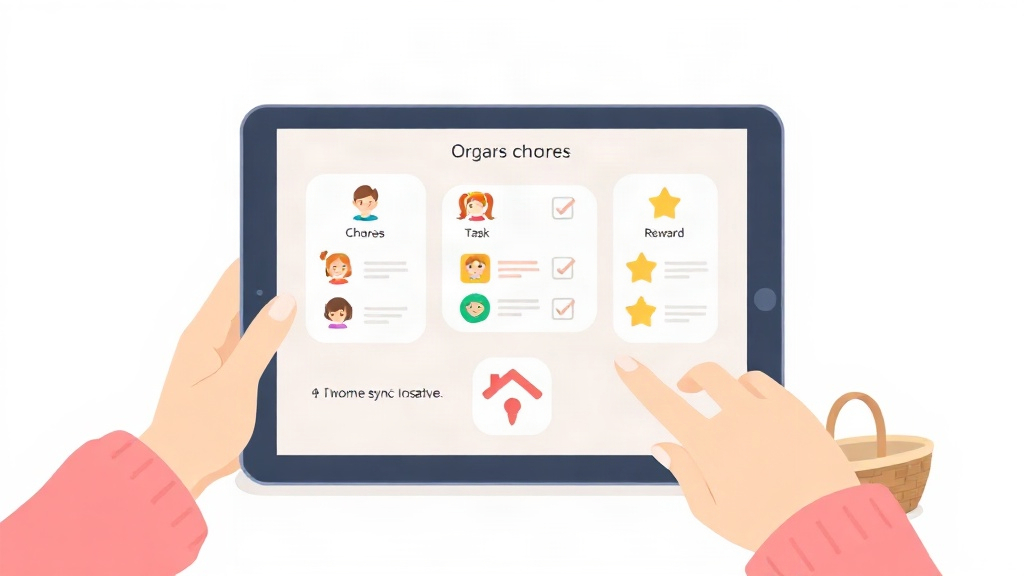
Two-home sync solves this by keeping task assignments, point balances, and activity history consistent across both households, so both parents are working from the same information regardless of custody schedule. That consistency matters most for kids who already deal with the disruption of switching homes regularly; a shared system removes one more thing that changes depending on which house they're in.
For a deeper look at tools built specifically for shared-custody logistics, see this guide to co-parenting apps.
Choosing a Chore App With Rewards
A chore app with rewards should combine age-appropriate login, a reward marketplace, and consistent tracking in one place rather than requiring separate tools for each. Before picking one, check it against a short list of criteria that paper charts and generic reward spreadsheets can't meet.
- Age-appropriate login: younger kids need a simple way to get into their account without typing a password every time
- Privacy-first design: a kid's app should limit what data is collected and shared, especially for children under 13
- Reward marketplace: points should convert into prizes or privileges the child actually wants, not a generic point total with no use
- Gentle penalties: a system should be able to deduct points for missed chores without feeling punitive or shaming
Watch Out: Free, paper-based systems have no record of history, no reminders, and no way to adjust rewards by age, so they tend to work for a few weeks before someone stops updating them.
If you're comparing specific options side by side, this roundup of chore and allowance apps walks through six tools and how they differ.